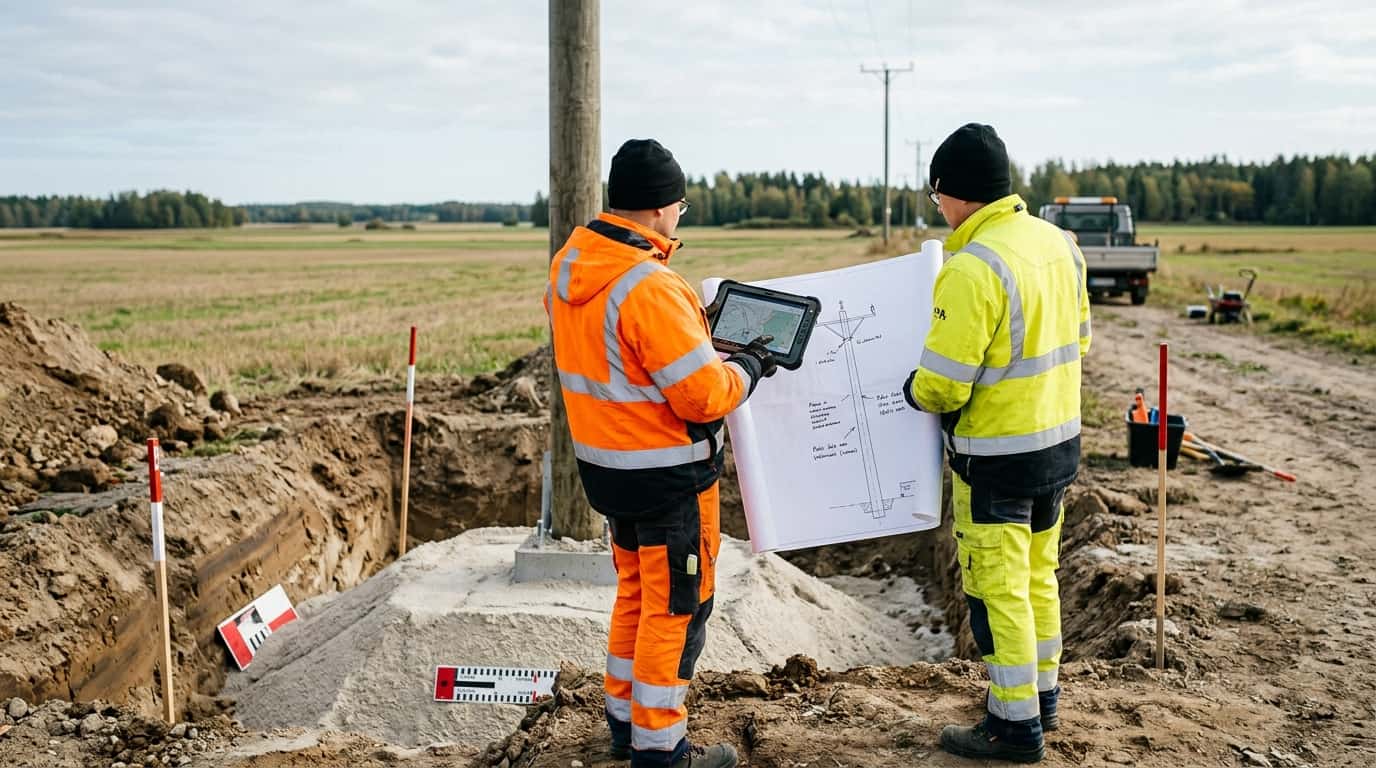
A useful pilot connects performance with the owner decision
What a Finnish SubLay C pilot should decide, what evidence to collect, and why a trial is not the same as a procurement contract.
Yalda Biyabani
How we think about staged lab work and pilots for SubLay C Form 1: matched comparisons, clear indicators, and no headline protection percentages.
Mahtab Dehghani
Chairman
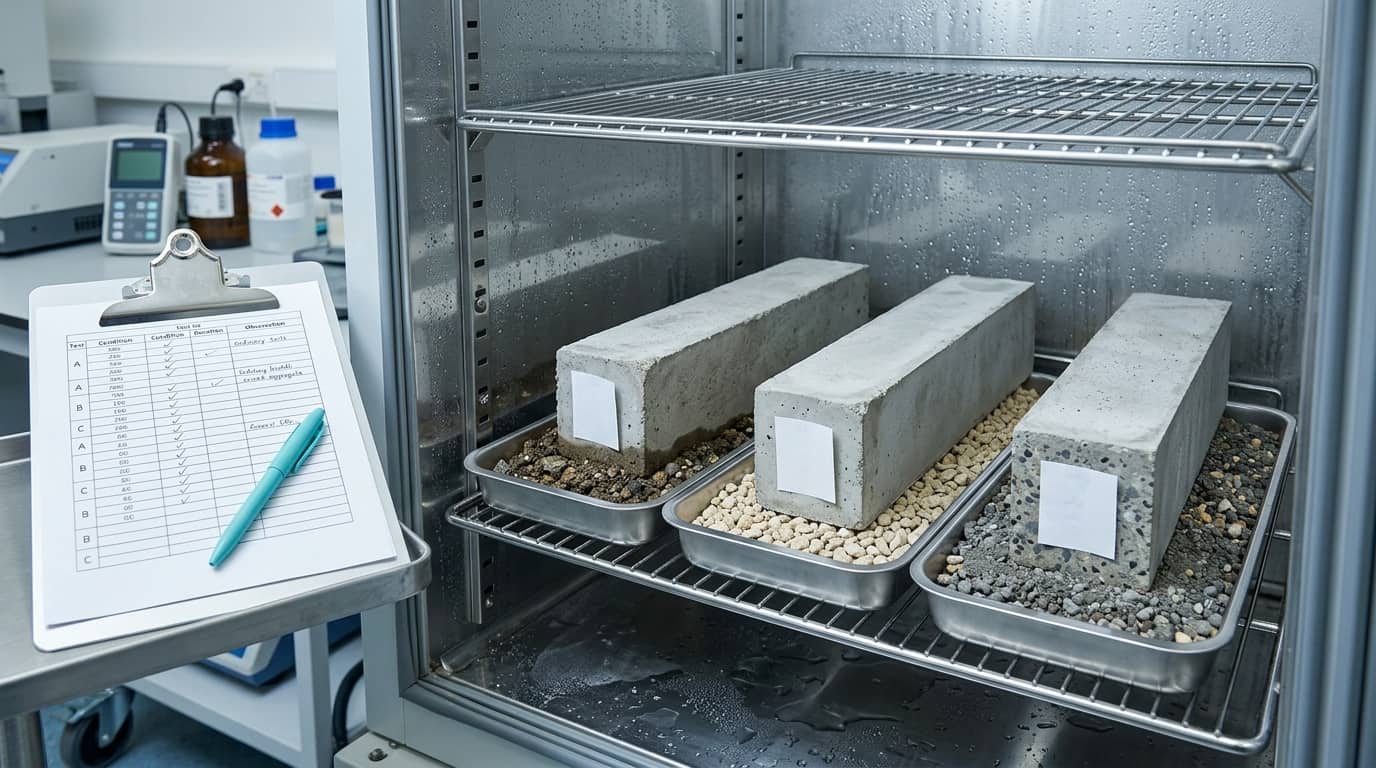
We publish ready / in progress / roadmap labels on SubLay C, not headline protection percentages. This note explains the staged programme behind those labels: characterise the blend, compare protective bedding to ordinary backfill under a defined exposure, then run a controlled Finnish pilot with monitoring.
Engineering proposal only. Figures and tables illustrate study design; they are not measured SubLay performance.
A durability programme begins with a function and a possible failure, not with a list of available laboratory equipment. Pimienta and colleagues describe a staged assessment of innovative cementitious products, connecting the description of the invention to appropriate tests and assessment criteria. Their framework is a useful methodological reference, although it is not a product-specific standard for SubLay. [1]
VTT's structural-materials work similarly connects characterisation, modelling and validation under realistic conditions. For a new ground-contact concept, this supports examining the assembled system as well as individual material properties. [2]
A proposed SubLay programme could proceed through three stages. First, characterise the candidate blend and identify unsuitable inputs (see qualifying recycled mineral inputs). Second, compare the protective bedding with a conventional reference under one clearly defined exposure. Third, evaluate installation and monitoring in a controlled Finnish field pilot with scoped placement, records, and follow-up. Each stage should have a question that can be answered before the next investment is made.
Record specimen preparation, concrete properties, bedding thickness, moisture, exposure chemistry, temperature and replicate numbers. Choose indicators that match the claim: for example, ion profiles for an ion-transport hypothesis and appropriate corrosion observations for a reinforcement-protection hypothesis. Include environmental release and physical stability where relevant.
Accelerated testing can help compare candidates, but the exposure must remain relevant to the proposed mechanism. A faster laboratory response is not itself a conversion factor to years of service. SubLay's eventual performance statement should identify the tested configuration, uncertainty and limits of use, rather than imply that one successful test validates every installation.
As an example, a claim about the complete protective blend can be examined with a conventional backfill reference and, where scientifically useful, a comparable mineral blend without the active additive. These comparisons answer different questions: whether the system improves on the reference and whether the additive contributes to that response. The design should avoid changing concrete quality, exposure and bedding composition simultaneously. Otherwise, an apparently positive result may be difficult to explain or reproduce. This arrangement is illustrative and must be refined by the testing team.
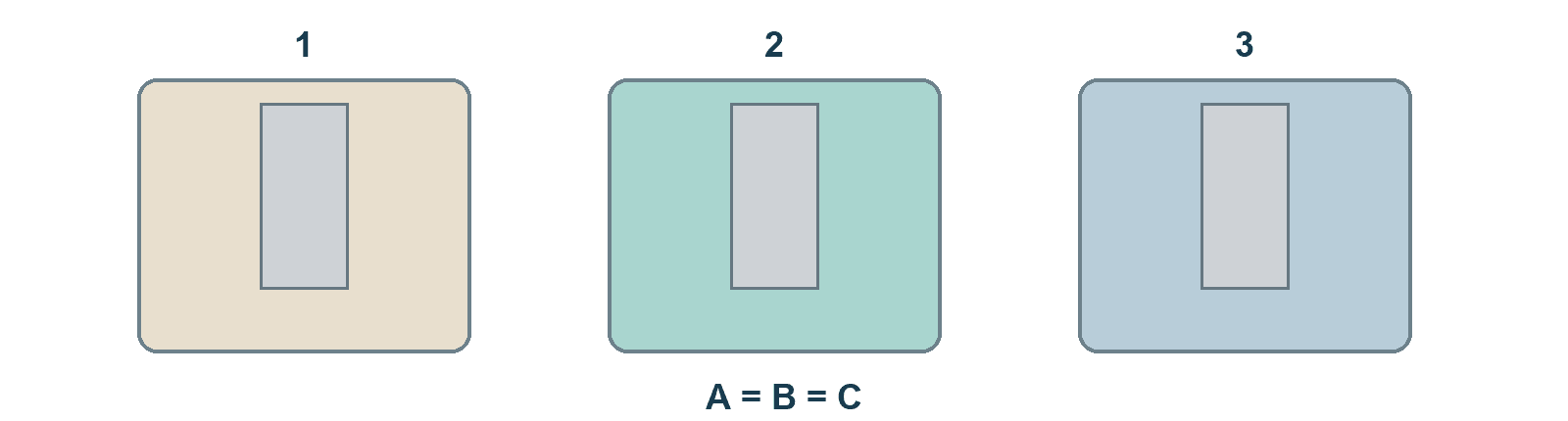
Figure 3: Illustrative matched comparison. Equal concrete and imposed exposure conditions; no measured performance is represented.
A test plan should state the decision that each measurement supports. Acceptance criteria can be absolute requirements or comparative targets, but they need a defensible basis. The number of specimens and repeat batches should be agreed with the laboratory according to variability and the intended conclusion. One convenient specimen is not a substitute for a sampling rationale.
The proposed matrix links each stage to an output. It also helps distinguish screening, which eliminates unsuitable candidates, from validation of a specified product configuration. Keep unsuccessful observations in the record; they help establish the limits of the eventual claim and prevent later repetition of the same unsuitable condition.
| Stage | Main question | Output |
|---|---|---|
| Characterisation | What is the material? | Defined sample and baseline |
| Screening | What rules it out? | Candidate selection |
| Controlled comparison | Does the hypothesis hold? | Measured difference and uncertainty |
| Repeat production | Can it be reproduced? | Batch consistency evidence |
| Field pilot | Does installation change the result? | Site evidence and next decision |
Original engineering review matrix; it does not prescribe acceptance limits or legal requirements.
For SubLay, the final report should identify the formulation, installation state, reference group and exposure. It should explain whether the observed difference supports the hypothesis and what remains unresolved. A pilot can then be designed to answer those remaining questions. This gives the field stage a clear purpose instead of treating it as a ceremonial step after laboratory testing.
Read how we communicate results publicly in How we publish validation status.
Buried concrete durability
Article 4 of 5
Keep reading
What a Finnish SubLay C pilot should decide, what evidence to collect, and why a trial is not the same as a procurement contract.
Yalda Biyabani
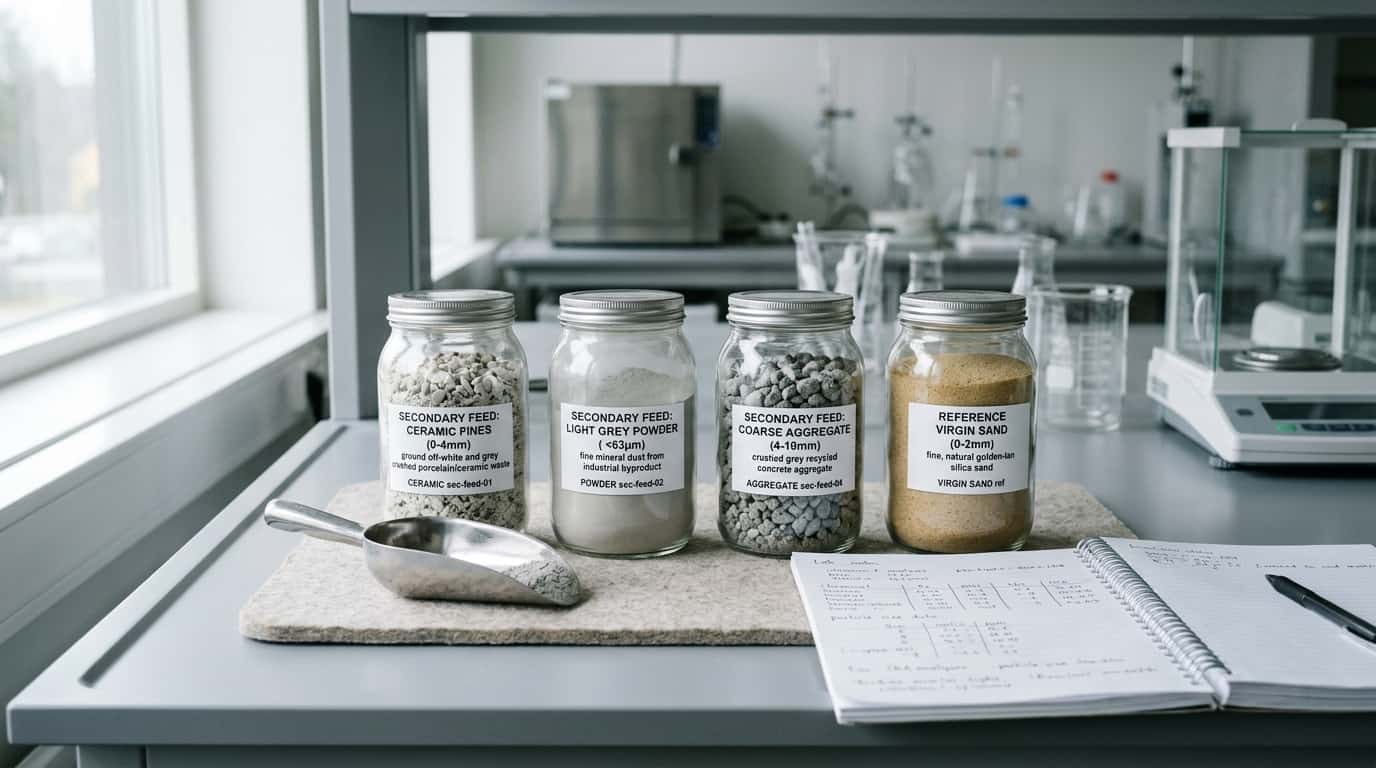
Industrial side streams can feed SubLay C when regulation allows, but each input needs its own qualification. Recycled percentage alone is not a product claim.
Mahtab Dehghani
Discussion
Comments
Ask about placement, pilots, or product framing. Comments are public; we may reply from the SubLay team.
No comments yet. Be the first to start the thread.