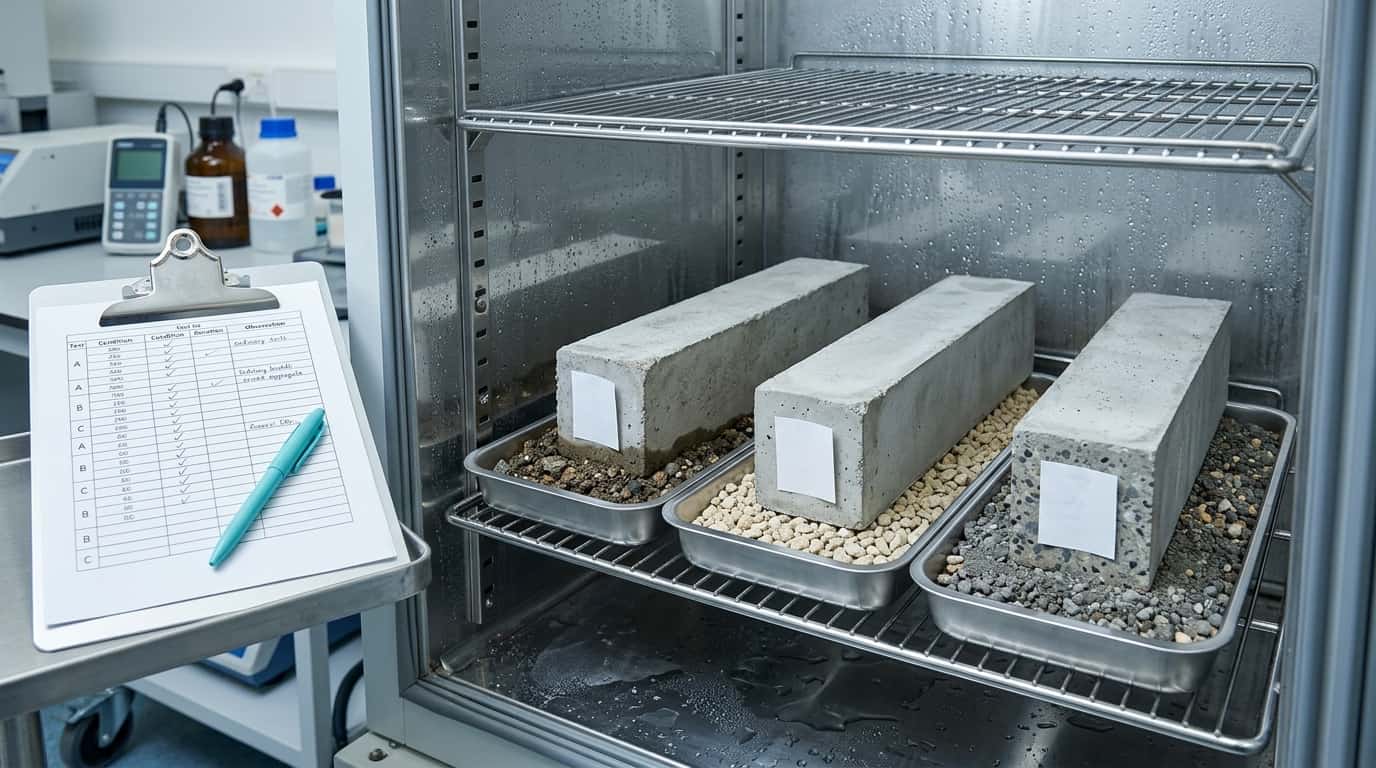
Building a credible durability test programme
How we think about staged lab work and pilots for SubLay C Form 1: matched comparisons, clear indicators, and no headline protection percentages.
Mahtab Dehghani
What a Finnish SubLay C pilot should decide, what evidence to collect, and why a trial is not the same as a procurement contract.

Yalda Biyabani
Head of Commercial
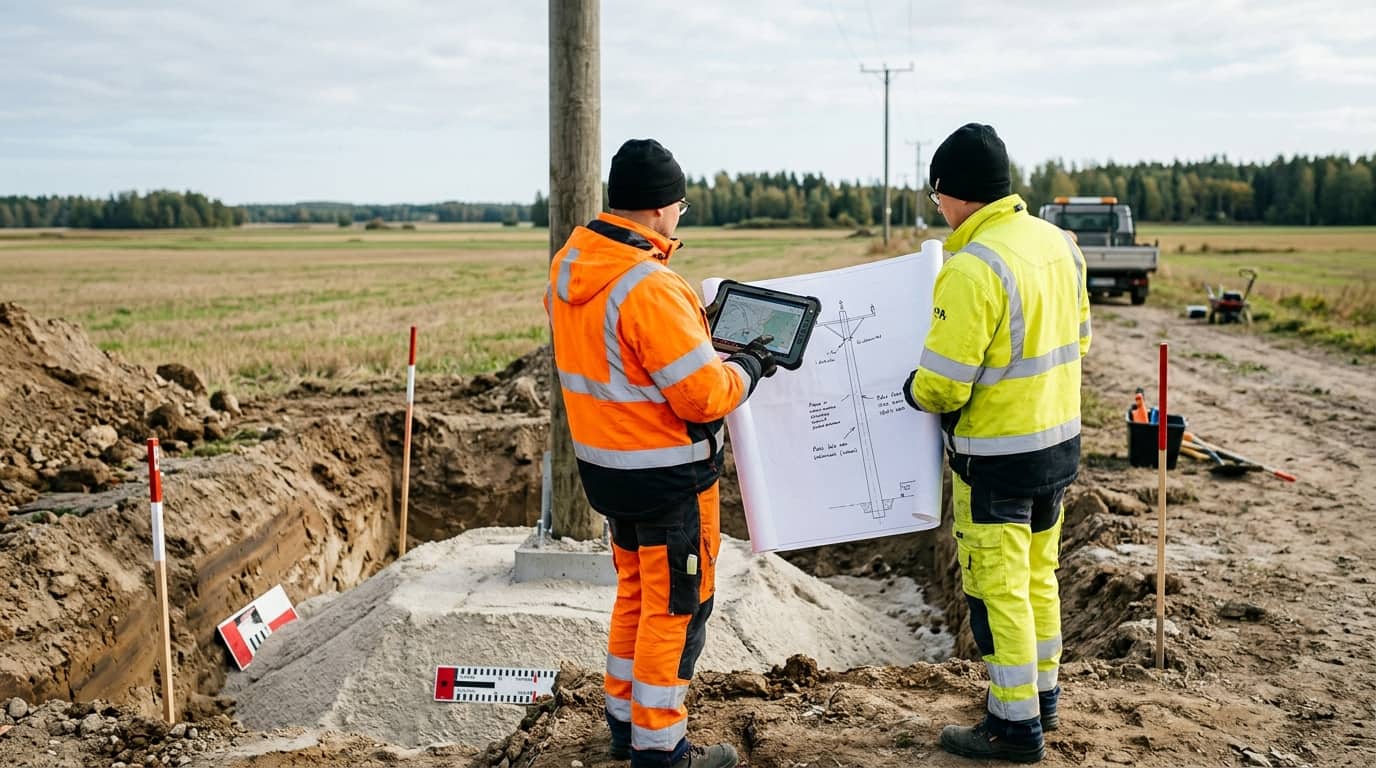
Year 1 we scope Finnish pilot packs and tonne supply of SubLay C Form 1: material, placement guidance, and monitoring agreed for the job. A useful pilot answers a question the asset owner actually faces: can the contractor place it, is the use acceptable on site, and does the evidence support the next step? It is not a headline durability claim and not a signed supply contract by default. It should sit on the staged durability test programme and the exposure context from earlier notes in technical notes on buried concrete durability.
Engineering and commercial framing only. Pilot outcomes depend on site, design, and the full durability programme. Citations do not imply endorsement of SubLay.
A pilot should answer a decision that an infrastructure owner actually faces. For a protective bedding, that may concern installation practicality, environmental acceptability or measurable improvement under a defined exposure. An attractive demonstration alone cannot answer all three.
Helsinki's research on circular-economy experiments provides a relevant distinction: Testbed trials are not the city's public procurement, and participation does not create a commitment to buy from the company. A pilot should therefore have its own evidence objectives rather than be described as a secured customer contract. [1]
The economic question also needs a consistent comparison. The European Commission's Level(s) guidance considers construction, maintenance, repair and replacement costs over time, using discounted costs. It was developed for buildings; applying its principles to a buried infrastructure component requires a suitable project boundary rather than automatic adoption of its building-level reporting unit. [2]
For SubLay, a proposed pilot brief should define the reference solution, installation quantity, monitoring indicators, responsibilities, access to data and criteria for stopping or continuing. Installation time, material loss and inspection needs should be recorded alongside technical measurements.
A later business case could compare delivered and installed cost with the reference option, then examine maintenance scenarios supported by evidence. Until service-life effects are demonstrated, avoided repairs should be presented as scenarios, not guaranteed savings. A useful pilot leaves the owner with an explicit next decision: revise the formulation, extend monitoring, test another exposure or consider a larger application.
An illustrative owner question is whether the additional installed cost of a bedding is justified for a foundation that is expensive to access later. The comparison should use the same functional requirement and study boundary for both options (for example delivered and installed cost against epoxy-plus-labour or membrane-plus-labour reference packages on similar scopes, without assuming unproven maintenance savings). It should not assume that all future repairs disappear after adding the new material. A scenario with no demonstrated maintenance benefit is a useful baseline, alongside clearly labelled conditional scenarios. This makes it possible to see which assumptions drive the proposed economic value.
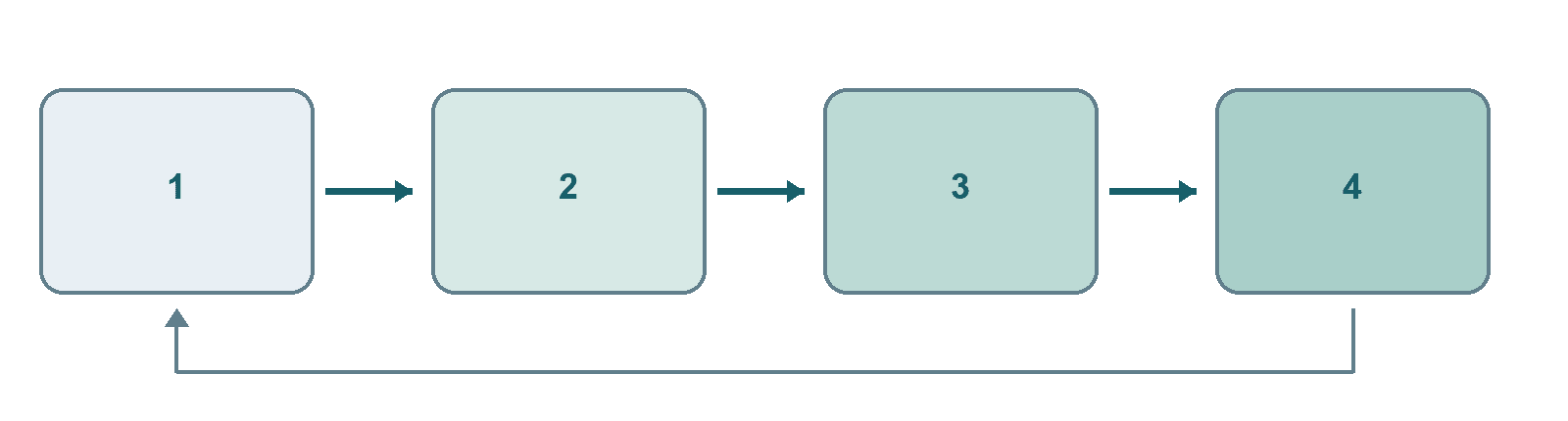
Figure 4: Proposed pilot decision cycle. The return arrow allows revision or further testing.
Before installation, agree what would justify moving forward. A pilot might demonstrate practical placement while leaving durability unresolved, or identify an environmental concern before a larger trial. These are useful outcomes if the questions were stated in advance. The report should distinguish successful execution from successful demonstration of the protective mechanism.
The table proposes a compact owner review. Costs should include the extra activities needed to use the material, not only its purchase price. Benefits should be linked to evidence or labelled assumptions. When modelling future costs, keep the study period, discounting approach and treatment of uncertainty consistent across the options.
| Owner question | Evidence to collect | Decision |
|---|---|---|
| Can it be installed? | Time, equipment and site records | Refine the installation method |
| Does it meet the intended function? | Matched performance observations | Continue or revise testing |
| Is the use acceptable? | Environmental and product documentation | Resolve the applicable route |
| What does it cost? | Delivered and installed cost | Compare with the reference |
| What remains uncertain? | Open issues and monitoring plan | Set the next stage |
Original engineering review matrix; it does not prescribe acceptance limits or legal requirements.
For SubLay, an effective close-out meeting would review technical observations, installation records and unresolved risks together. The next step might be further monitoring, a revised mixture or a larger controlled application. The decision should be recorded with its conditions. That record is more useful for later customers than a statement that the pilot was simply completed.
For who we target first and what a pack includes, see Finnish infrastructure pilots: who we are looking for. For the lab stages that feed the field trial, see Building a credible durability test programme. Ready to scope a site? Request a pilot.
Buried concrete durability
Article 5 of 5
Keep reading
How we think about staged lab work and pilots for SubLay C Form 1: matched comparisons, clear indicators, and no headline protection percentages.
Mahtab Dehghani
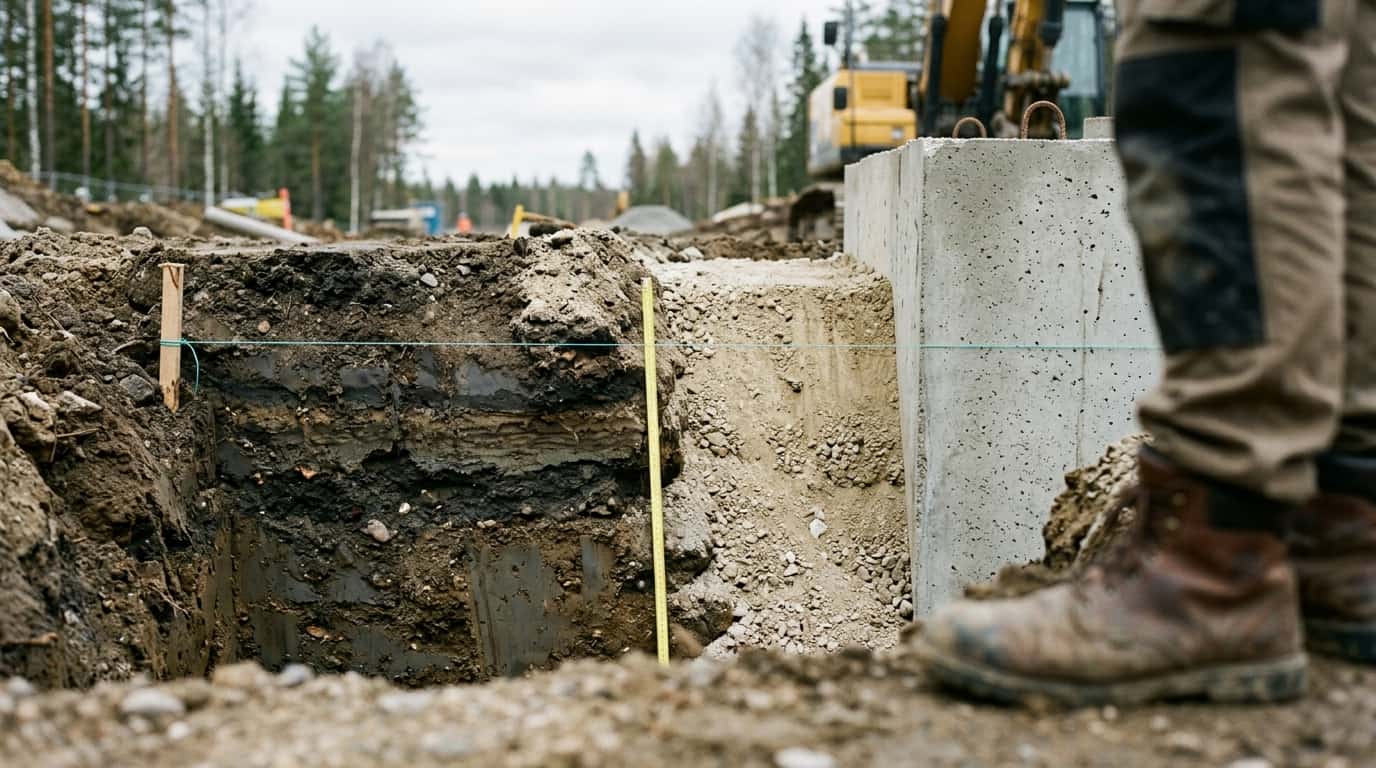
A short index of engineering notes on ground exposure, Finland acid sulfate soils, material qualification, validation, and pilots. SubLay C Form 1 treats the contact zone without changing the mix design.
Mahtab Dehghani
Discussion
Comments
Ask about placement, pilots, or product framing. Comments are public; we may reply from the SubLay team.
No comments yet. Be the first to start the thread.